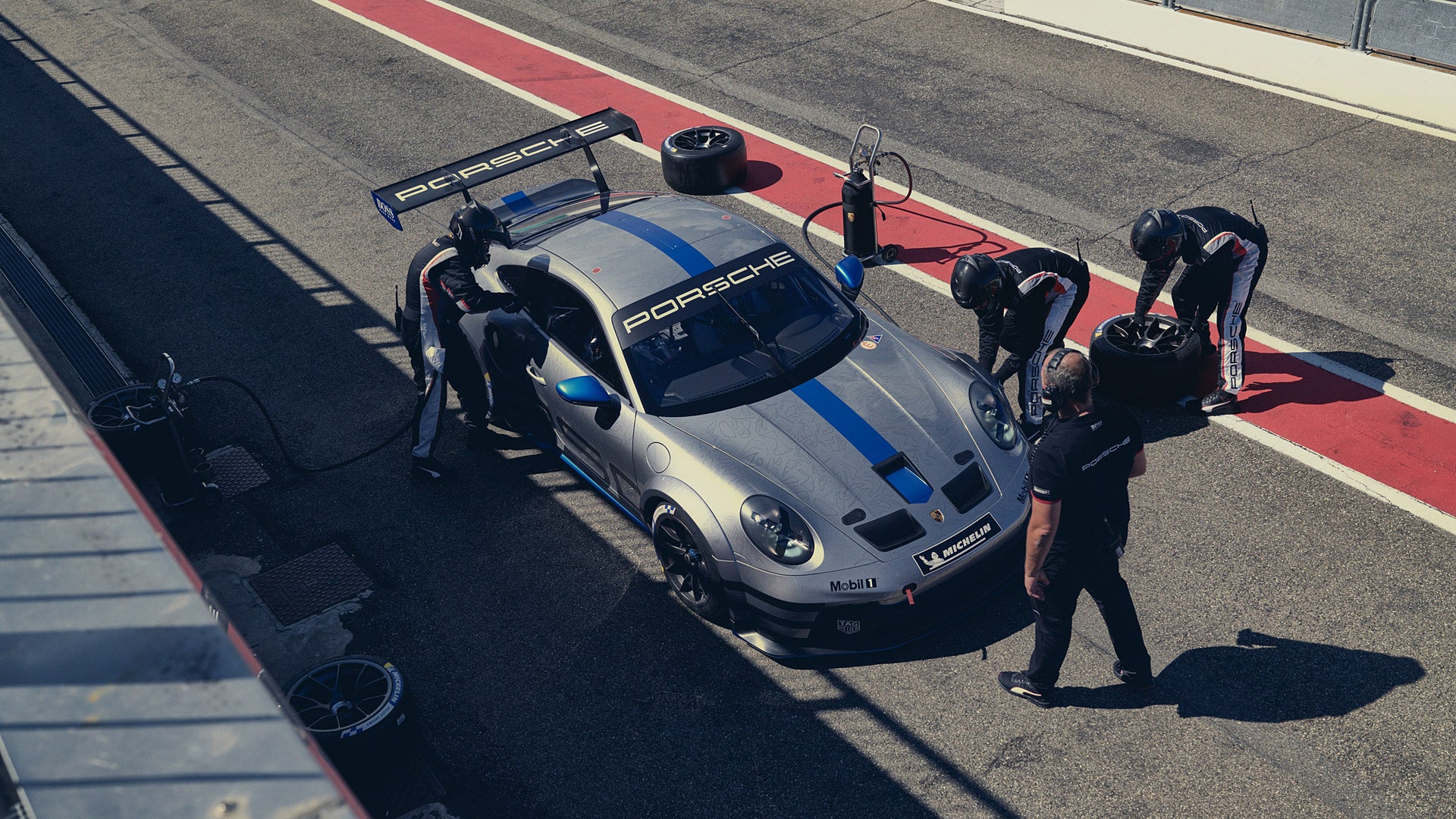
Inside the high-stakes arena of contemporary professional oversteer competition, success is not merely solely a product of sheer horsepower or pilot aggression. Instead, it has evolved into a multifaceted science that requires a scrupulous fusion of picking a time-tested vehicle platform, arming it with the highest-quality performance parts, and, most critically, understanding its real-time characteristics on the course through advanced suspension tuning applications. This definitive guide acts as your blueprint starting from the very first idea of a drift build all the way to the final telemetry-optimized refinements that transform a capable car into a repeatable champion. We will delve deep into the art and science of vehicle alignment optimization, illustrating how a advanced drift tuning app like GripDial eliminates guesswork and provides unparalleled insight into your vehicle's true performance.
The foundation of any great drift car is, without question, the chassis itself. Certain platforms have achieved legendary standing within the international sliding scene due to their natural weight distribution, strong construction, and the vast ecosystem of specialist components available. Picking the correct car is the first and most crucial decision a builder will make. For instance, the BMW's E36 3 Series is universally acknowledged as perhaps the the greatest balanced drift cars of all time. Its almost ideal evenly distributed mass, coupled with a rear-wheel-drive layout and bulletproof inline-six engines, establishes a platform that is simultaneously accessible for novices and extremely competitive in the control of a pro pilot. The next step of this lineage, the E46 model BMW, refines these qualities with a more sophisticated frame, wider track for greater high-speed stability, and yet more lock as standard from the manufacturer. A different powerful contender in the professional circuit is the C6 generation Corvette.
This muscle-derived sports car introduces a distinctive array of benefits to the sliding world, such as a low-mass alloy frame, a transaxle-style gearbox and differential unit that contributes to an excellent weight distribution, and the colossal low-end power of a big LS-series V8 engine. This combination transforms it into an utter monster on track, able of initiating and maintaining continuous slides with apparently minimal application of power. For drivers looking for remarkable value, the 350Z model Nissan excels as a prime choice. It is delivered from the factory with a rigid chassis, a effective original limited-slip differential, and the free-revving V6 engine that offers plenty of power and torque for mastering and moving up in the sport. Its follow-up, the 370Z model, brings additional refinements in structural rigidity, steering geometry, and peak engine performance, establishing its status as a favorite selection among professional competitors. Further legendary cars that merit mention encompass the lightweight Wankel-engined Mazda FC, the ubiquitous S13 Silvia/240SX, the torque-rich Ford SN95, the modern E90 3 Series, and the compact yet incredibly engaging and instructive Mazda MX-5. All of these cars offers a distinct array of attributes, complexities, and potentials, but they all share the fundamental ingredients necessary to serve as a serious sliding vehicle.
However, picking the optimal car is only the beginning. To access the complete performance of any of these cars, significant changes to the steering system and suspension systems are completely mandatory. This is where the world of precision aftermarket hardware enters vital focus. The most most transformative upgrade for a serious drift car is the installation of a high-performance drift angle kit. These sophisticated assemblies, like those developed by industry leaders like SLR Speed, are engineered to dramatically increase the vehicle's possible lock-to-lock rotation. A factory production vehicle is highly constrained in how far its steering tires can turn, a engineering trade-off for on-road driving. In oversteer driving, however, extreme countersteering is constantly required to catch and hold a slide. An steering kit replaces the stock hubs, tie rods, and often control arms with pieces that enable the steered wheels to reach steering lock beyond 70 or even 80 °, versus a normal stock angle of around 40 to 50 degs.
This vastly expanded capability gives the operator with exponentially greater control during a slide, enabling it to be far simpler to initiate a drift, sustain it through a sweeping turn, and transition fluidly from one direction to the opposite. The contrast in drivability is truly transformative. Paired with a appropriately selected modification is the equally critical upgrade to the chassis's damping system. Off-the-shelf or including premium sport coilovers are just not intended for the particular and brutal requirements of sliding. A drift-spec system of coilovers is paramount. These specific dampers have unique valving and spring rates that are optimized for the violent load shifting that is inherent of sliding. When a pilot begins a angle, the chassis's inertia is shifted violently to the front of the turn. Correct performance coilovers control this shift in a predictable way, permitting the vehicle to settle rapidly and offering the driver clear feel through the controls and seat. They also enable accurate setting of ride height, rebound and compression rate, and weight balance, which are all integral aspects of dialing in the chassis's behavior to a given venue or piloting approach. In combination, a top-tier steering angle kit and a expertly selected pair of drift-spec suspension units form the undeniable hardware foundation upon which all later refinement is built.
Once the fundamental hardware is in place, the following critical stage in the development is the meticulous tuning of the chassis's suspension geometry. This is the realm of chassis dynamics adjustment, a procedure that can seem overwhelmingly complex to the newcomer but is, in reality, the defining factor to transforming a set of high-performance parts into a unified and predictable machine. The most discussed parameter of suspension geometry for oversteer is certainly negative camber. Camber angle is the inclination of the tire compared to the upright line when observed from the forward of the car. When the top of the wheel is leaning towards the car, this is referred to as inward tilt. In drifting, an inward tilt on the front axle wheels is generally used and is regarded as critical. The purpose is intrinsically tied to vehicle dynamics.
When a car is turning at high slip angles, the chassis leans towards the outer of the corner. This chassis roll makes the outside steering tire to lose its optimal contact patch with the tarmac. By introducing negative camber, the wheel is pre-leaned to account for this tilt. As the chassis rolls into the turn, the tire becomes more upright on the track, increasing its grip at the precise point when it is absolutely essential for directional command. Usually, front camber settings for a dedicated sliding vehicle fall between approximately -3 degrees to as extreme as -5 degrees or even more, depending on the parameters of the vehicle configuration, compound type, and driver preference. The rear wheels also use inward tilt, but the settings are typically more conservative and less aggressive than the front. Too much negative camber at the back can make the car extremely loose and challenging to control on throttle application, as it diminishes the usable tire footprint of the driven wheels during forward acceleration. Hence, rear axle angles are often in the range of -1 degree to -3 degrees, striking a delicate balance between providing adequate side grip to help in entering and maintaining the angle while also maintaining effective grip for power-down the bend. alignment is just one part of the larger tuning picture, which also encompasses toe setting, self-centering steering, and bump steer adjustment.
Toe setting is the angle of the tires when viewed from a bird's-eye view. Inward toe means the front edges of the wheels are nearer together than the rear edges, while negative toe means the reverse. For drifting, a modest amount of front axle toe-out is frequently used to improve the turn-in handling reaction, making the vehicle feel more agile and eager to begin a slide. Rear axle toe is generally set to zero or a incredibly small amount of positive toe to foster stability under power. caster angle is the longitudinal or rearward angle of the suspension pivot when viewed from the side-on of the chassis. Positive caster enhances self-centering and high-speed confidence, and it also increases negative camber gain during cornering, which is highly beneficial. Adjusting these parameters is a detailed dance where a modification to a single parameter can and often will impact the remaining parameters. The old-school approach for tuning a vehicle's suspension geometry for drifting has for a long time been a time-consuming affair of experimentation and feeling. A driver or team would apply a adjustment based on intuition, test the chassis on track, depend on the driver's subjective sensation and comments, and then apply a further tweak. This process would repeat time after time until the car felt "good" or the available testing session ran out. This system is not only extremely slow in terms of time and resources, but it is also fundamentally flawed.
Pilot perception is a notoriously inconsistent metric, colored by numerous variables such as fatigue, evolving track grip levels, ambient heat, and merely the mindset of the driver on that given session. What feels "loose" on one pass might feel "understeery" on the next pass, resulting in contradictory information and ineffective tweaks. This long-standing challenge in car suspension tuning is precisely where modern technology has made its mark to transform the landscape.
The rise and integration of specialized suspension tuning applications has ushered in a completely new paradigm for engineering and optimizing professional drift machines. This new generation of systems, showcased by innovative products like modern telemetry hardware, work by directly capturing the actual dynamic performance of the chassis as it is being driven on the track. In contrast to depending on personal impression, these devices collect quantifiable information on key variables such as damper compression and extension, wheel speed, lateral and longitudinal g-forces, steering angle, and accelerator and brake pedal position. This raw data stream is then interpreted by sophisticated algorithms that can visualize and interpret the metrics in a comprehensible format. For the first time ever, engineers and crews can see specifically what the chassis is performing at every millisecond of a lap. This function changes the complete chassis setup procedure. Consider the aforementioned task of optimizing the front negative camber for a specific car. Rather than making a modification from -3 degrees to -3.5 degrees and then driving many runs to try and "feel" a improvement, a vehicle dynamics tool can provide real-time and clear information. The software can display in a chart how the wheel's loading is behaving during the most important moments of a slide: initiation, holding the angle, and changing direction. It can show if the current value is allowing the loaded tire to keep ideal grip or if the tire is working inefficiently on its external shoulder.
The tool can then suggest data-driven suggestions for modification. Perhaps the data indicates that the tire is even overworking its outer shoulder at -3.5 degrees of camber, indicating that a move towards angle, say -4 degrees, might be beneficial. On the other hand, the information might show that the tire is not coming up to optimal operating temp or that the inside edge is degrading excessively, which could indicate that there is overly aggressive angle and a slight decrease back to -3.2 degrees would be more ideal. This standard of granularity and useful insight was literally unattainable in the time of pure mechanical adjustment.
The impact of employing a advanced drift telemetry system goes much further than only setting camber angles. It becomes an priceless coilover setup tips that is tailored to your exact chassis. When fine-tuning the damping settings on your suspension, instead of using imprecise guidelines drift tuning app or mimicking another driver's numbers, you can utilize the telemetry to observe how the car is performing in reaction to your changes. The application can graph the wheel movement data over a section of track, highlighting if the coilovers are controlling the chassis motion properly or if they are allowing the vehicle to become unsettled too much after a transition. It can aid in identifying issues like bottoming out or excessive extension, allowing you to introduce educated adjustments to preload settings, damping values, or ground clearance. This process applies equally to the intricate task of corner balancing. In addition to camber, the software can provide analysis into how adjustments to toe settings and caster angle are impacting the vehicle's handling during various maneuvers of a slide. For example, it can assist you to determine the ideal amount of front axle toe-out for your particular steering configuration and competition style by analyzing the response time of initial reaction and the stability of the vehicle at full countersteer. This turns the software an exceptionally effective vehicle dynamics manual that is dynamically calibrated by the real-world dynamics of your own chassis on the circuit. It moves the complete process from a mysterious craft into a repeatable development process.
Furthermore, the application of a system like data acquisition is not at all limited to professional teams with extensive resources. For the club-level enthusiast, it serves as an powerful equalizer. It in essence offers the driver with the insight of a full-time race engineer without requiring the associated overhead. It accelerates the tuning process by providing unambiguous directions to questions that would traditionally take countless track days of experience to answer. A tuner can learn how their particular drift suspension tuning guide vehicle responds to different adjustments, gaining a deeper knowledge of suspension theory in the journey. It also democratizes advanced chassis dynamics techniques, allowing all drivers with the drive to optimize their vehicle to achieve it in a systematic and productive fashion. This is particularly valuable in a discipline like sliding, where tuning knowledge has traditionally been a closely guarded commodity among professional crews. Today, that knowledge can be in the hands of every motivated builder.
In summary, the path to building and tuning the ideal high-performance drift car is a comprehensive mission that smoothly combines time-honored mechanical knowledge with cutting-edge digital technology. It begins with the strategic pick of a legendary platform, then enhanced by the installation of non-negotiable competition hardware like high-performance steering angle kits and properly selected competition adjustable dampers. The process then advances into the precision phase of alignment optimization, where parameters like camber, toe setting, and caster are precisely set to match the chassis's modified hardware and the driver's individual needs. Ultimately, and what really separates the today's approach from the old ways, is the use of a powerful vehicle dynamics tool vehicle dynamics tool. This platform eliminates the uncertainty and waste of only feel-based adjustment by providing objective, real-time telemetry on how the vehicle is really functioning. It serves as an incredible diagnostic aid, a comprehensive alignment optimization handbook, and a master vehicle dynamics tool. Together, this complete philosophy ensures that every aspect of the drift machine—from the pick of the chassis to the final adjustment on the suspension—is optimized for peak success on the track. It signifies the total evolution of the discipline of oversteer driving, connecting raw car control with data-informed suspension engineering to build the ultimate dominant machines possible.